

Boosting Employee Engagement with Weekly Coaching: Insights from Top Coaches


Your best employee may not be disengaged.
After spending over 20 years across HR, career development, corporate training, and coaching leaders, I have seen this pattern too often:
Not because they stopped caring.
But because their manager was promoted without being developed.
What the Employee Engagement Data Is Really Saying
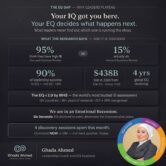
According to Gallup’s State of the Global Workplace 2026 report, global employee engagement dropped to 21%.
That statistic is not just about employees.
It is also about the leadership environments they are adapting to.
The employee engagement graphic highlights a deeper workplace reality:
When engagement drops, many organisations immediately ask what is wrong with employees.
A better question is:
What kind of leadership experience are people having every day?
Because in many cases, what looks like low employee engagement is actually a response to poor leadership, weak management, and emotionally unsafe work environments.
Employee Disengagement Is Often a Leadership Issue
Many managers are handed targets, pressure, and responsibility.
But not many are developed on how to:
So the team feels it.
They feel it in leaders who only correct but rarely coach.
They feel it in workplaces where people start doing only what is required to protect themselves.
This is why employee disengagement cannot always be solved by telling teams to work harder, care more, or show greater initiative.
Sometimes the real issue is leadership.
Why Good Employees Become Disengaged at Work
One of the most common workplace mistakes is assuming disengaged employees have stopped caring.
Often, that is not true.
Many employees disengage because they no longer feel:
In many organisations, high-performing employees do not disengage because they are lazy.
They disengage because they are tired of working under leaders who were promoted without the skills to lead people well.
That is an important difference.
Because when organisations misunderstand the root cause of disengagement, they create solutions that never solve the real problem.
When Managers Are Promoted Without Leadership Development
A strong performer does not automatically become a strong leader.
Promotion may recognise technical excellence, reliability, or output.
But leadership requires something more.
It requires the ability to influence, support, guide, communicate clearly, and create trust.
Without leadership development, managers can unintentionally create environments where:
And when that happens, even committed employees begin to retreat.
Not always loudly.
Not always dramatically.
Sometimes it looks like professionalism on the outside while disengagement grows underneath.
Why Leadership Development Matters for Employee Engagement
If organisations want to improve employee engagement, they have to invest in leadership development.
This is especially true for managers.
Managers shape the daily experience of work more than strategy documents, engagement campaigns, or culture statements ever will.
They influence whether employees feel:
This is why coaching skills are current leadership currency.
Today’s workplace needs leaders who can do more than assign tasks and monitor performance.
People need managers who can:
Coaching does not weaken leadership.
It strengthens it.
It helps leaders move from controlling performance to developing people.
And that shift directly affects employee engagement, team culture, retention, and trust.
What a Coaching Culture Looks Like in Practice
A coaching culture does not begin with a large leadership programme alone.
It starts in small daily habits.
It starts in how managers speak, listen, respond, and lead.
A coaching culture starts when leaders learn to:
These behaviours may look simple.
But they shape whether people feel dismissed or developed.
Whether they speak up or stay silent.
Whether they grow or quietly disengage.
The Real Cost of Poor Leadership at Work
By the time employee disengagement becomes visible, something has usually already been lost.
It may be:
This is why the exit interview is often too late.
By then, the employee has already adapted, disconnected, or decided.
Sometimes the resignation did not begin with a better offer elsewhere.
Sometimes it began with feeling unheard, unseen, unsupported, or badly led for too long.
That is the hidden cost of poor leadership at work.
How Organisations Can Prevent Employee Disengagement
If you want stronger teams, healthier workplace culture, and better employee engagement, start by developing your managers.
Build leadership capability early.
Equip managers with the coaching, communication, and emotional intelligence skills they need to lead well.
Because when leaders grow, teams feel it.
And when teams feel well led, engagement rises.
Conclusion
Employee engagement is not only about employee attitude.
It is also about leadership quality.
It is about whether people feel trusted, supported, developed, and safe enough to contribute fully.
In many organisations, the real opportunity is not simply to demand more engagement.
It is to build better-led environments where engagement can thrive.
Develop your managers before your best people start leaving.
Because sometimes, the exit interview did not need to happen.
If your organisation wants to improve employee engagement, strengthen manager capability, and build leaders who know how to coach, communicate, and create trust, leadership development can no longer be optional.